Maharshi Dayanand Saraswati
Introduction & Vision
Maharshi Dayanand Saraswati: An Overview
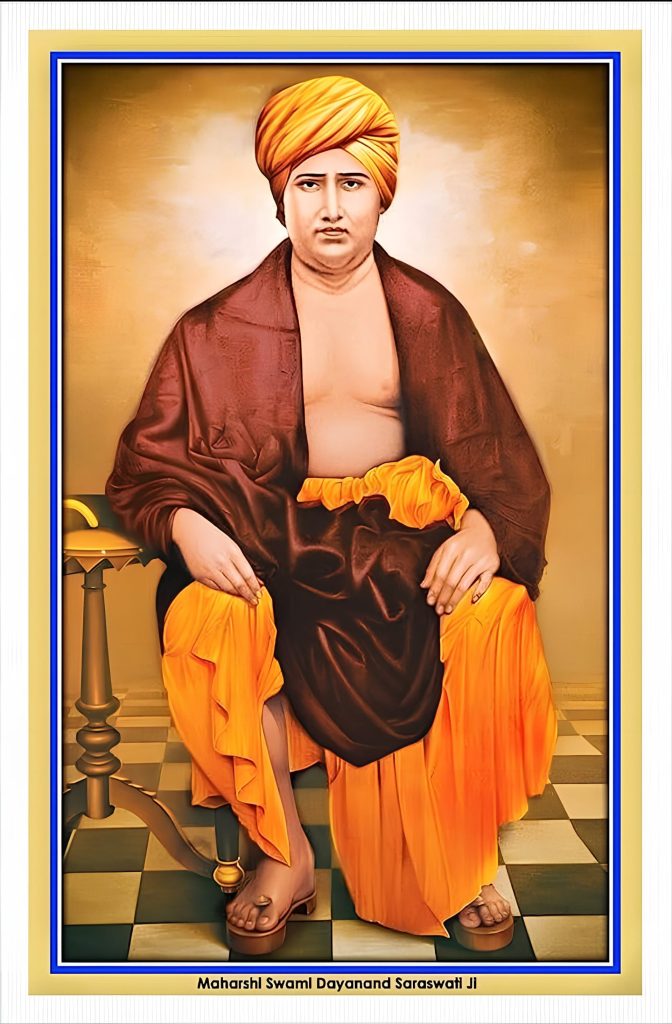
Maharshi Dayanand Saraswati (1824–1883) was one of 19th-century India’s most influential spiritual leaders, social reformers, Vedic scholars, and national revivalists. Revered as one of the primary "Makers of Modern India," he dedicated his life to challenging deep-rooted social evils and superstitious practices, advocating a rational, ethical, and monotheistic approach to life anchored in the original Vedic texts.
He is best known as the founder of the Arya Samaj (1875), a reform movement that sought to purify society by stripping away rigid caste distinctions, idol worship, and gender discrimination. Long before the formal political freedom struggle gained momentum, he was among the first thinkers to proclaim "Swaraj" (self-rule) and assert that "India is for Indians" in 1876.
"Back to the Vedas! The primary object of Arya Samaj is to do good to the world, i.e., to promote physical, spiritual, and social progress of all humans."
— Maharshi Dayanand Saraswati
Life & History
History & Life Journey
Born as Mool Shankar Tiwari on February 12, 1824, in Tankara, Gujarat, he grew up in an affluent Brahmin family. A pivotal turning point occurred during a Shivratri vigil when young Mool Shankar saw a mouse running over a sacred Shiva lingam and consuming offerings. This raised a profound question: if a deity could not protect its own offering from a tiny rodent, how could it be the omnipotent ruler of the universe?
Following the deaths of his sister and uncle, he was driven to seek liberation (moksha). In 1846, at age 22, he fled home to escape an arranged marriage and spent 15 years as a wandering ascetic (sannyasi) across India.
1860 — Discipleship
Studied Vedic scriptures under the blind master Swami Virjanand in Mathura, pledging his life to preach Vedic truth.
1875 — Arya Samaj
Established Arya Samaj in Bombay, launching reforms for widow remarriage, women's education, and abolition of caste barriers.
Major Works & Writings
Major Literary Works
Maharshi Dayanand Saraswati authored over 80 literature pieces, commentaries, and essays written primarily in Hindi and Sanskrit to make ancient knowledge accessible to ordinary citizens.
• Satyarth Prakash (1875):
His magnum opus "The Light of Truth" detailing Vedic philosophy, statecraft, ethics, and a critical analysis of superstitions.
• Rigvedadi Bhashya Bhumika:
A scholarly introduction to the study and interpretation of the Rigveda and Yajurveda.
• Sanskarvidhi (1877):
A clear manual detailing the 16 essential Vedic rites of passage purged of superstitious accretions.
• Vyavahar Bhanu & Panchmahayajya Vidhi:
Practical guides detailing daily ethical conduct, civic duties, and social responsibilities.
"The main goal of education is to create human awareness so that one can understand the difference between truth and untruth."
— Satyarth Prakash
Final Days & Educational Legacy
Final Days & Lasting Impact
Dayanand Saraswati passed away on October 30, 1883, in Ajmer, Rajasthan, after being fatally poisoned due to his outspoken stances against moral corruption. On his deathbed, he remarkably forgave the perpetrator who administered the poison.
His passing inspired his followers to establish the Dayanand Anglo-Vedic (DAV) educational movement in 1886, blending traditional Vedic moral values with modern scientific education.
"He was a hero of action, a giant of intellect, and a warrior of truth who reshaped modern Indian consciousness."
Today, hundreds of DAV schools, colleges, and traditional Gurukuls operate across India and abroad, preserving his enduring vision of an enlightened, progressive, and self-reliant society.